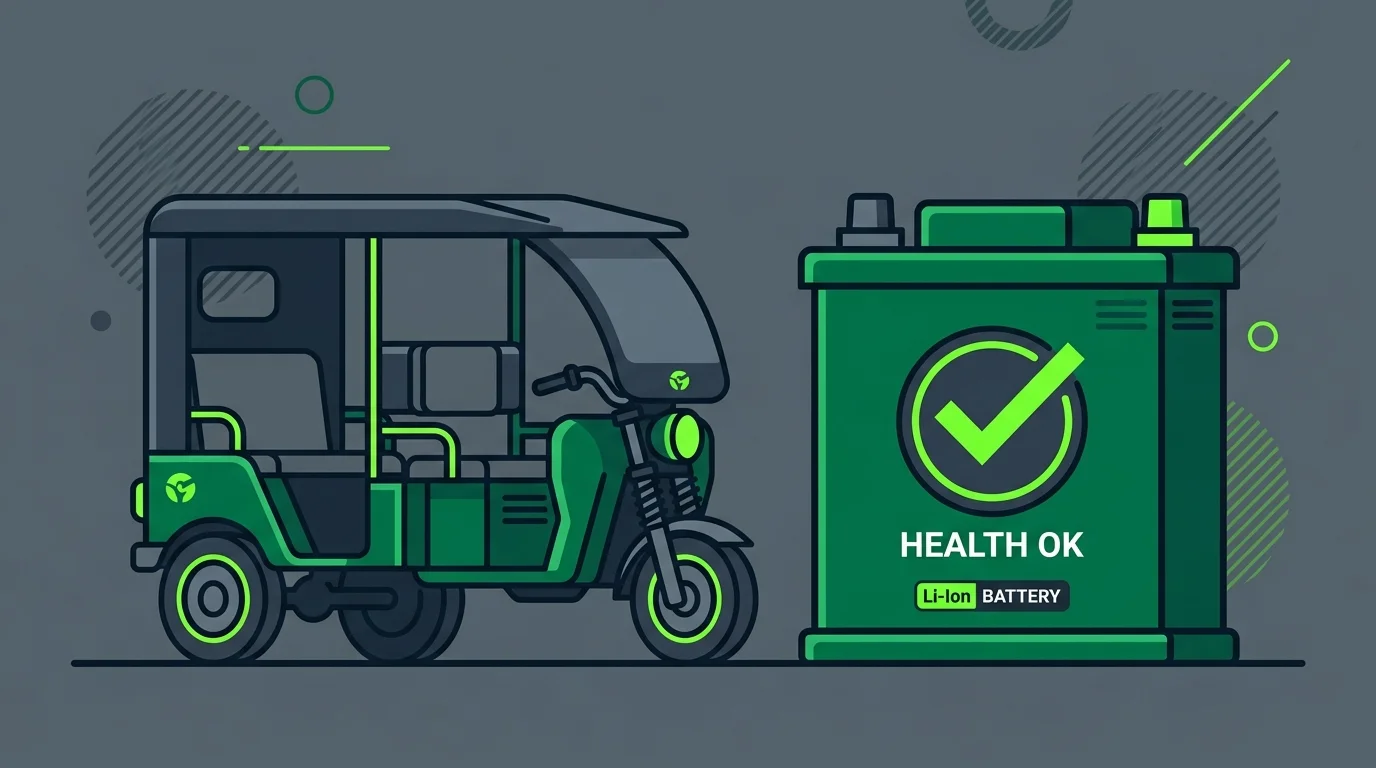
- Commercial Fleet Economics: Extending lithium battery service life from 2 to 4 years directly doubles the driver's net operational margin.
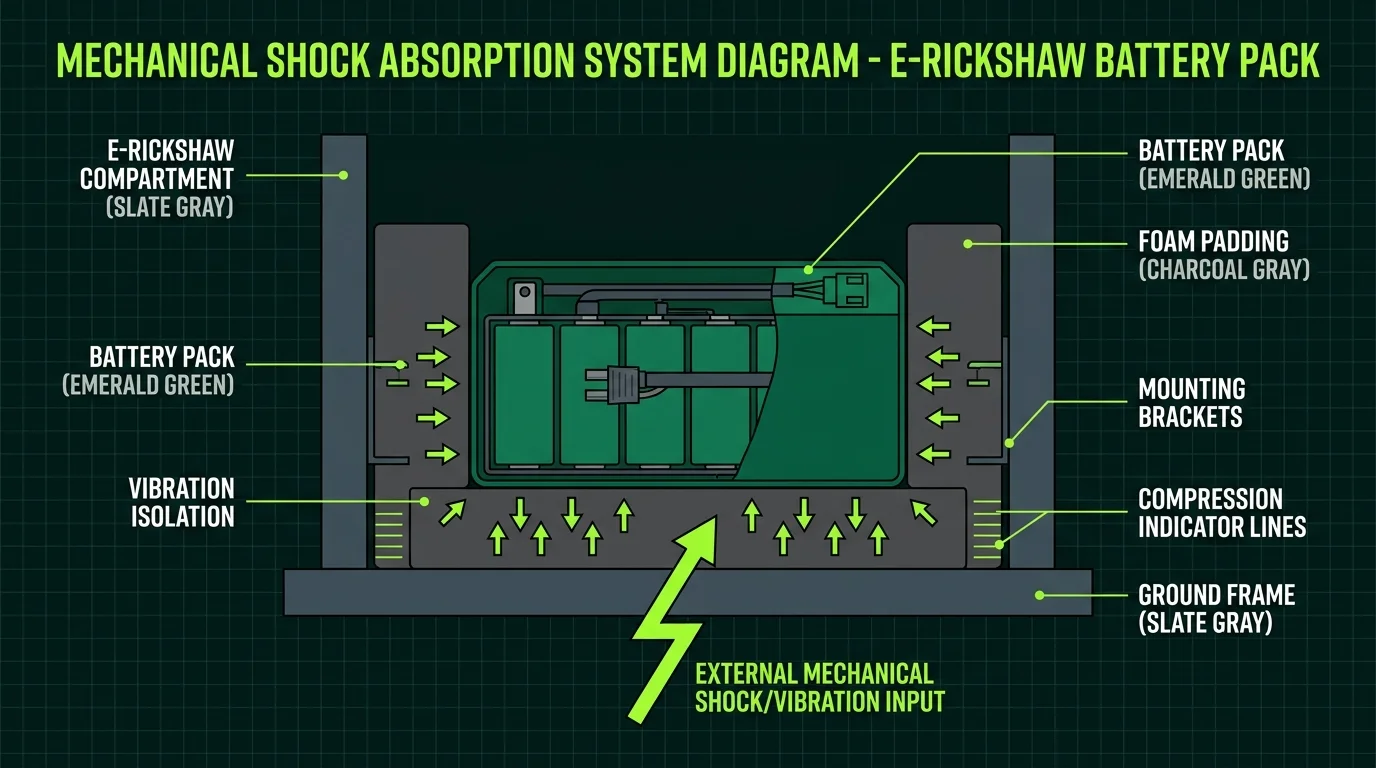
- Vibration Control: Heavy mechanical shocks from potholed roads can detach cell interconnect strips, leading to high-resistance balance faults.
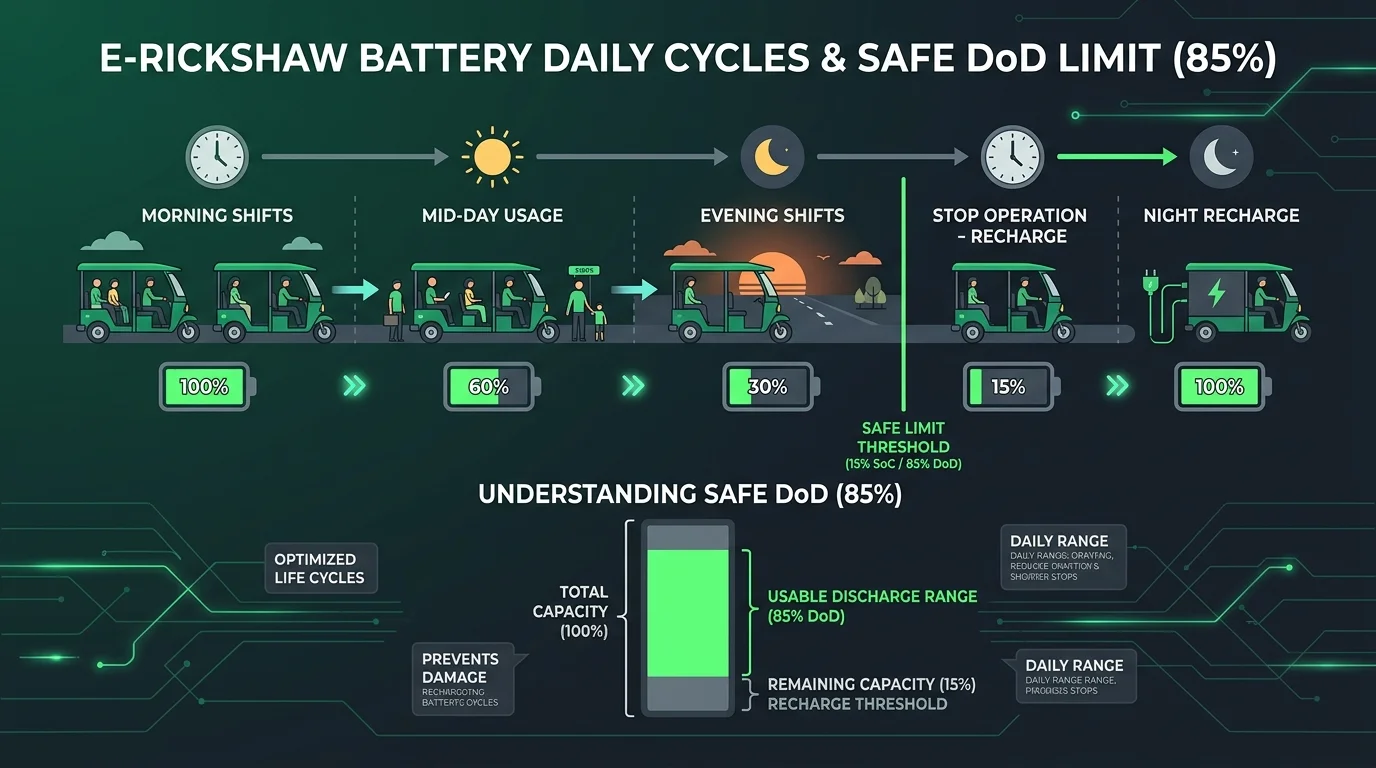
- Depth of Discharge (DOD): Restricting daily discharge to 85% DOD (leaving 15% SOC) significantly extends cycle lifetime.
Table of Contents
- 1. E-Rickshaw Battery Lifecycle Economics
- 2. Mechanical Protection & Vibration Mitigation
- 3. Crucial Rules for Daily Operations
- 4. Diagnosing Faulty Cells Early
- 5. Frequently Asked Questions
- 6. Sources & References
1. E-Rickshaw Battery Lifecycle Economics
In the Indian light transport sector, the lithium battery pack represents the single largest capital expense of an e-rickshaw. A properly managed LiFePO4 pack can comfortably sustain 3,000 charge-discharge cycles if operating temperatures and currents are managed. By monitoring cell status via apps like BAT-BMS, drivers can avoid catastrophic cell reversals and ensure their investment pays off over multiple years.
2. Mechanical Protection & Vibration Mitigation
Vibration is the silent enemy of battery health. Commercial rickshaws navigate rough roads daily. The resulting mechanical shocks put massive strain on copper busbar welds. If a weld develops micro-cracks, it increases resistance, causing localized heating during high-current acceleration. Ensure the battery box is padded with high-density EVA foam inserts to isolate cells from direct shocks.
3. Crucial Rules for Daily Operations
Adopt these operational practices to maximize pack life:
- Avoid Deep Discharge: Do not drive until the vehicle cuts out completely. Plug in the charger when the SOC hits 15-20%.
- Post-Discharge Rest: Let the battery rest for 15-20 minutes after a long shift before plugging in the charger, allowing internal cell temperatures to stabilize.
- Keep Clean and Dry: Keep the battery casing free from dirt, dust, and water ingress, which can corrode BLE transceivers.
4. Diagnosing Faulty Cells Early
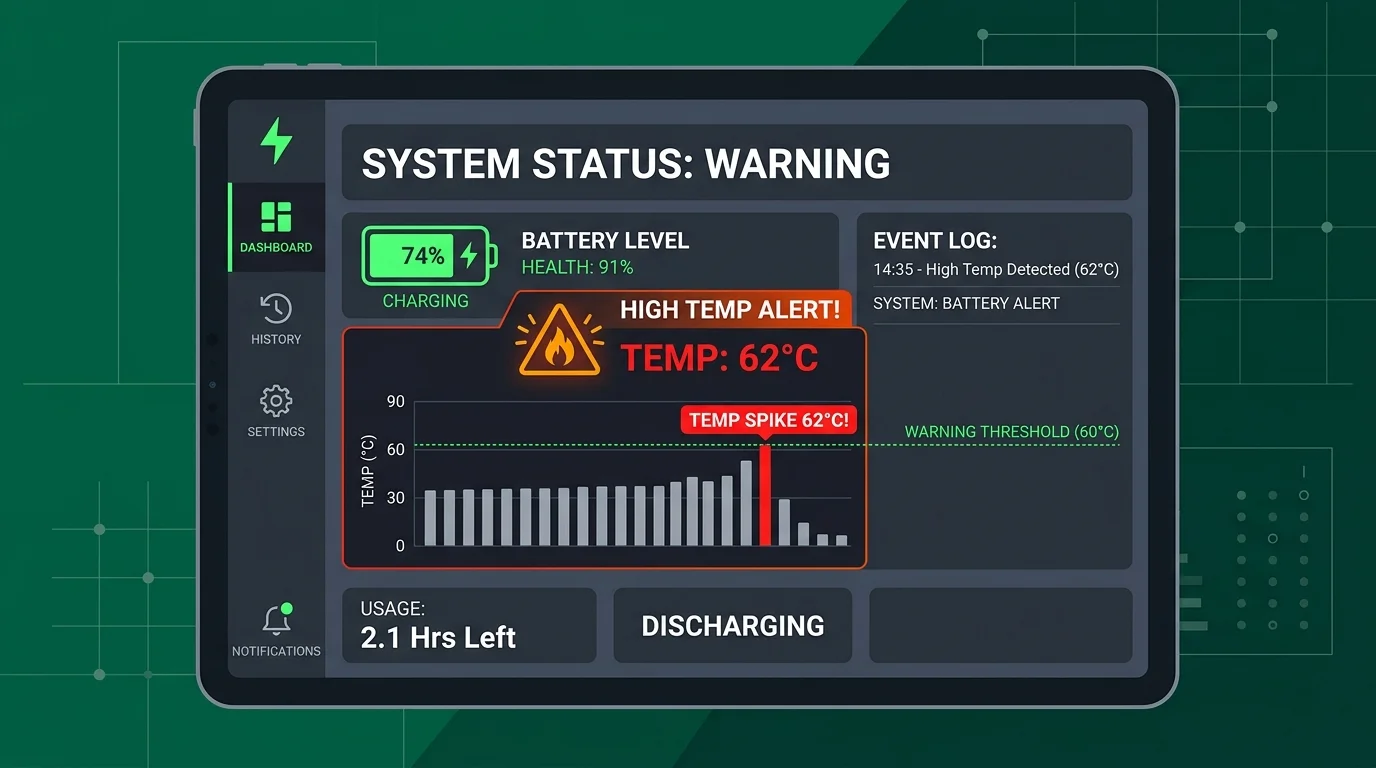
Use the cell voltage screen inside BAT-BMS weekly. If one cell consistently shows a voltage delta exceeding 50mV compared to its neighbors under load, it indicates high internal resistance or capacity mismatch. Identifying this early allows individual cell replacement rather than scrapping the entire pack.
5. Frequently Asked Questions
Yes, provided your charger has an automatic cut-off and the BMS board's over-voltage protection circuits are functioning correctly.
Mechanical damage (crushed cells), external short circuits, charging in sub-zero temperatures (lithium plating), or bypassing BMS protection units entirely.
6. Sources & References
- Standard Mechanical Testing Procedures for EV Batteries (Automotive Research Association of India)
- Grenergy Fleet Management and Battery Care Handbook, 2025.
- "Vibration Analysis and Longevity of Lithium Batteries in Commercial Vehicles", Transport Engineering, 2026.