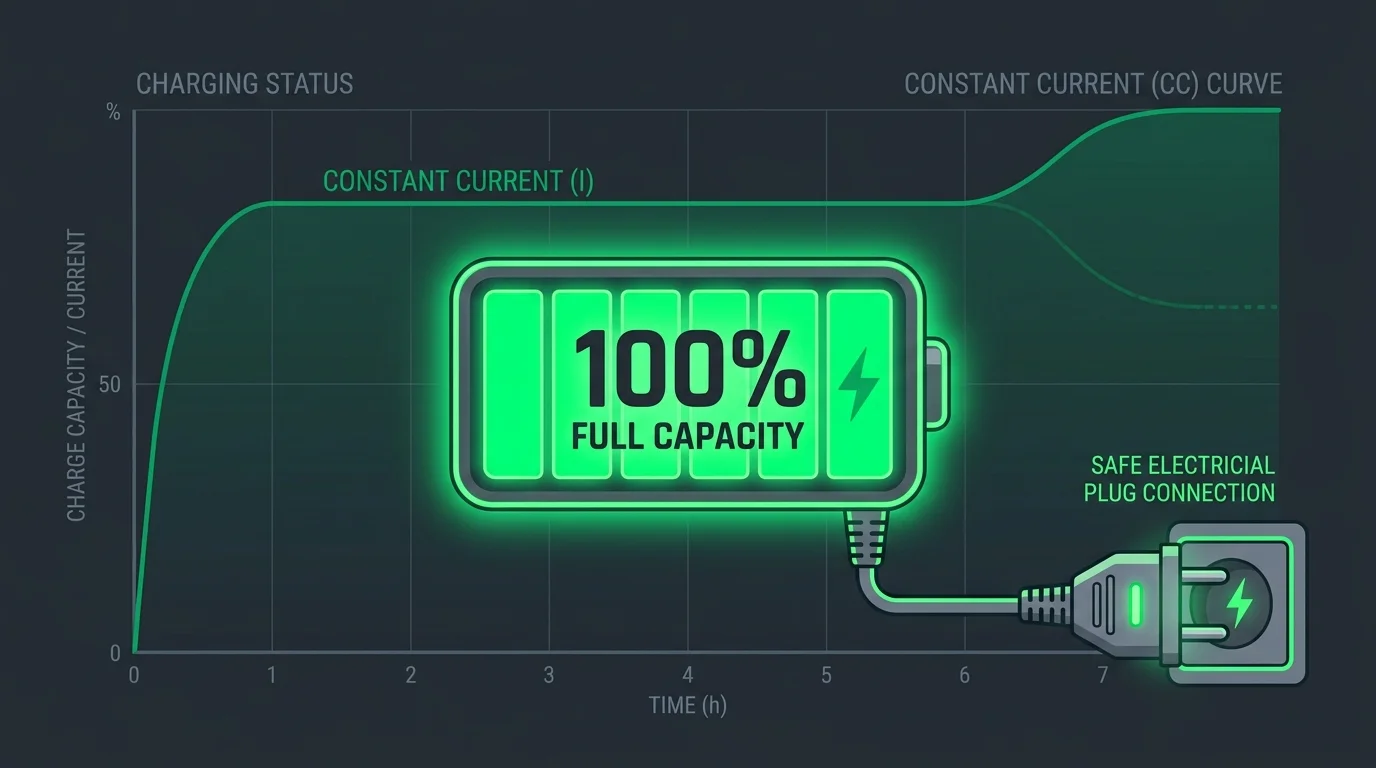
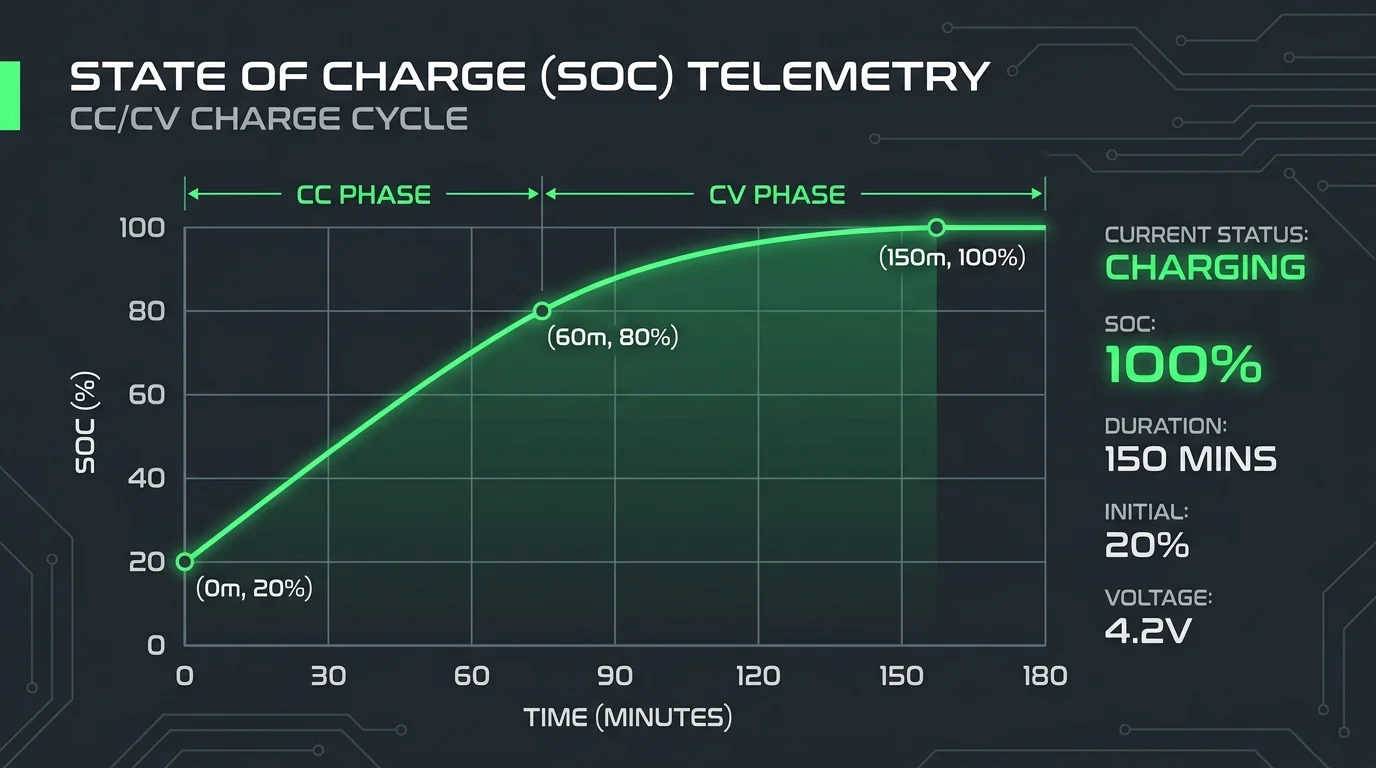
- Ideal Charging Curve: LiFePO4 batteries are charged using a Constant Current / Constant Voltage (CC/CV) profile.
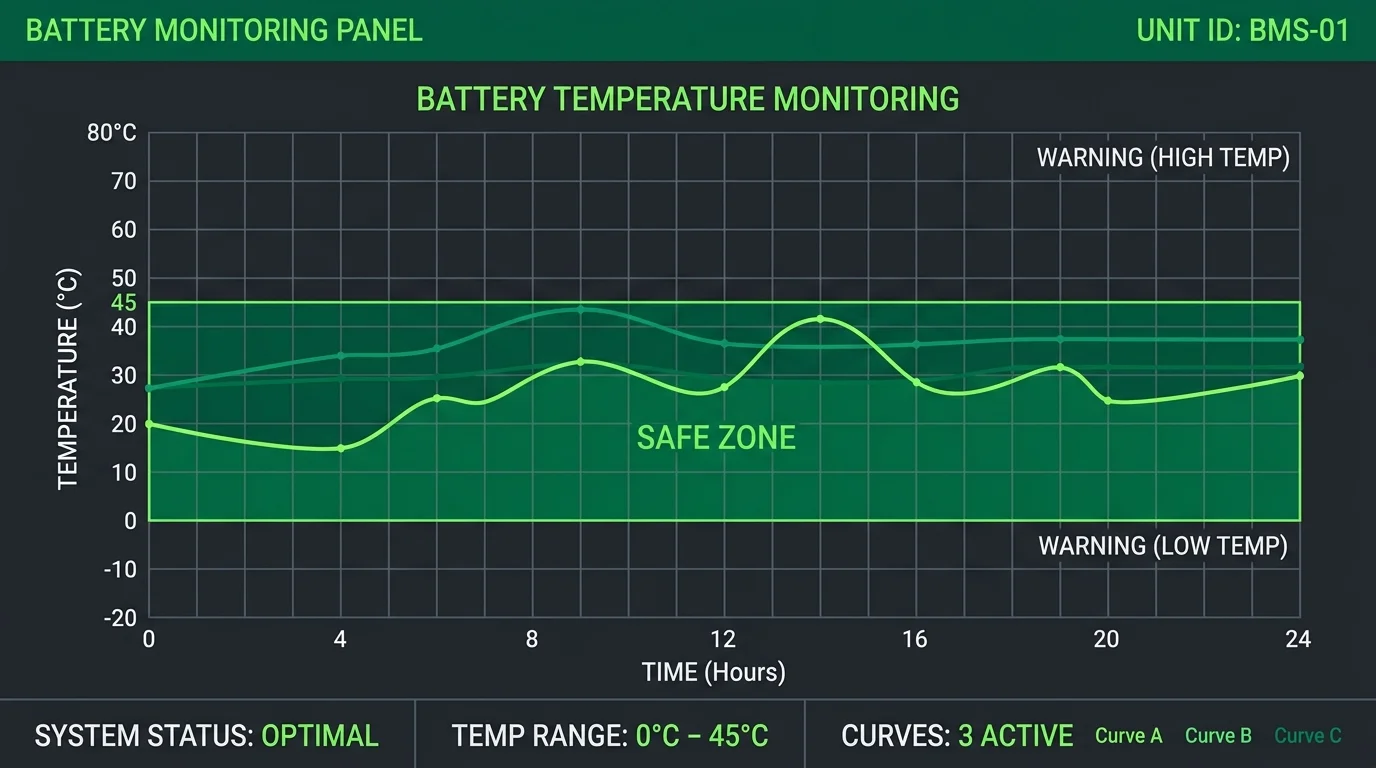
- Thermal Protection: Charging below 0°C or above 45°C causes irreversible cell damage (lithium plating or thermal runaway precursors).
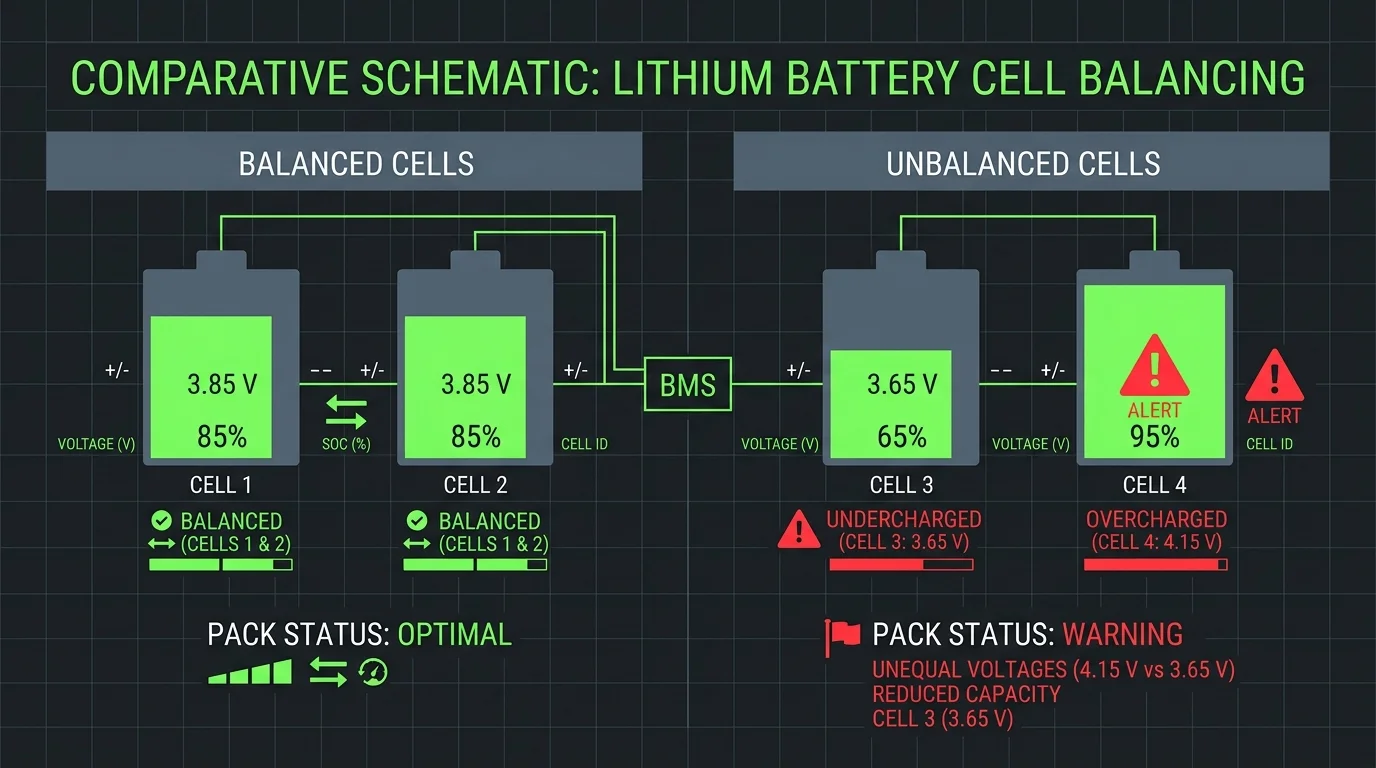
- Cell Balancing Timing: Passive cell balancing is only active during the end of the charge phase (above 3.4V per cell).
Table of Contents
- 1. The Constant Current / Constant Voltage (CC/CV) Charging Profile
- 2. Thermal Limits and Safe Operating Temperatures
- 3. The Importance of Cell Balancing During Charge
- 4. Balancing Charge and Discharge Profiles
- 5. Frequently Asked Questions
- 6. Sources & References
1. The Constant Current / Constant Voltage (CC/CV) Charging Profile
Unlike lead-acid chemistry, LiFePO4 requires a strictly controlled CC/CV profile. During the Constant Current (CC) phase, the charger provides a steady current (typically 0.5C to 1C), causing the pack voltage to rise steadily. Once the target cell cut-off voltage is reached (usually 3.65V per cell), the charger transitions to the Constant Voltage (CV) phase, keeping the voltage steady while current slowly tapers down to zero.
2. Thermal Limits and Safe Operating Temperatures
Lithium iron phosphate cells are resilient, but they are highly sensitive to charging temperatures. Safe charging can only happen between 0°C and 45°C. Charging below 0°C blocks the intercalation of lithium ions into the anode, resulting in lithium plating which permanently decreases battery capacity and creates internal short circuit hazards.
3. The Importance of Cell Balancing During Charge
Because battery cells have slightly different internal resistances, their voltages will drift apart over repeated cycles. If one cell hits the over-voltage threshold early (e.g. 3.75V), the BMS will trigger charge protection, stopping the cycle before the rest of the pack is fully charged. Passive balancing burns off this excess energy as heat, allowing all cells to reach peak charge state together.
4. Balancing Charge and Discharge Profiles
In high-load applications like commercial e-rickshaws, the battery pack undergoes rapid charging and discharging. Keeping a close watch on the Coulomb counting logs inside BAT-BMS is essential for identifying potential cells degradation before it impacts vehicle uptime.
5. Frequently Asked Questions
No. Passive balancing only operates when cell voltage rises above the start-balancing threshold (typically set between 3.40V and 3.45V) and the voltage difference exceeds the target delta (usually 30mV).
We strongly recommend charging batteries in well-ventilated locations. Never charge lithium-ion cells in tightly enclosed compartments without thermal extraction fans or fire suppression barriers.
6. Sources & References
- Standard Electrochemical Specifications for LiFePO4 (IEEE Transactions on Power Electronics)
- Grenergy BMS Hardware Charging Profiles datasheet (v2.1)
- "Thermal Runway Mitigation in Commercial EV Fleet Operations", Battery Technology Journal, 2025.